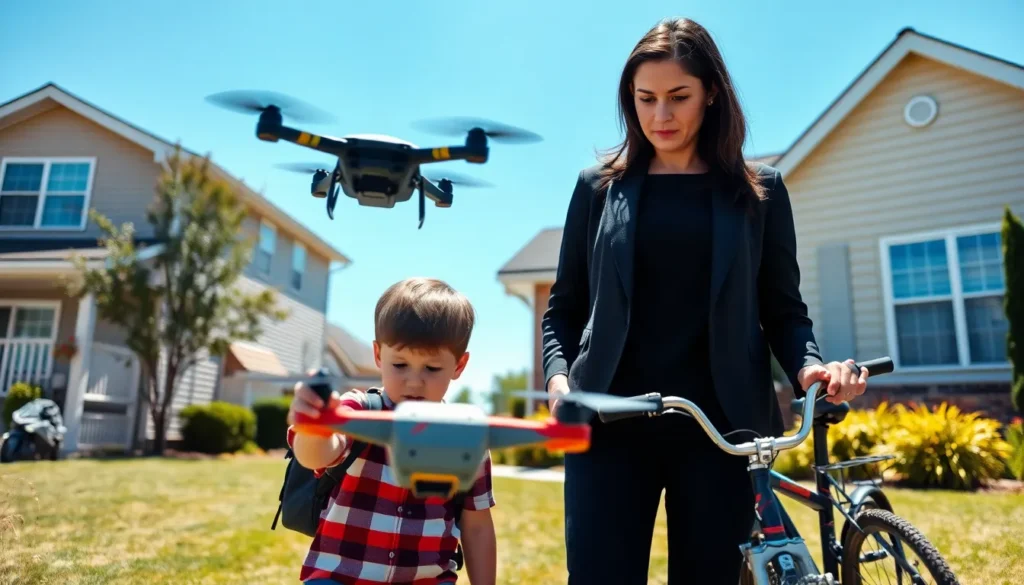
Ever felt like your mom was about to land her helicopter right in your backyard? Well, you’re not alone. Helicopter parenting, a style characterized by over-involvement and micromanagement, is becoming alarmingly common. While parents often think they’re helping their kids soar, they might, in fact, be stalling their potential takeoff. Let’s jump into the whirlwind of effects that helicopter parenting can have, and trust me, it isn’t all smooth sailing.
Understanding Helicopter Parenting

Helicopter parenting is a term that has gained traction in recent years, describing parents who take an overprotective approach towards their children. This parenting style often manifests as hovering, where parents are excessively involved in their children’s lives, making decisions for them and monitoring their every move. They closely oversee not just their kids’ activities, but their friendships, academic challenges, and even social interactions. While these parents usually mean well, intending to protect their children from failure, they might end up drowning them in security measures that hinder their growth. The origin of this term can be traced back to the late 1990s, and today, it reflects a shift in parenting philosophy, where love transforms into control.
Psychological Effects On Children
The psychological impact of helicopter parenting can be profound and often detrimental. Children raised in this manner may suffer from anxiety and fear of failure. Because they are rarely allowed to make mistakes, they often develop a distorted self-image: their sense of worth becomes tied to their parents’ perceptions and expectations. This creates a dependency, where children feel they can’t act or make decisions without their parents’ input. Besides, they may exhibit lower self-esteem, stemming from their belief that they are incapable of succeeding on their own. Studies show that this constant supervision and criticism can lead to an increased likelihood of mental health issues, including depression.
Impact On Independence And Life Skills
One of the glaring consequences of helicopter parenting is the attenuation of independence in children. When parents constantly intervene, children often miss opportunities to develop crucial life skills. From navigating friendships to solving everyday problems, these are experiences that shape their ability to thrive in the real world. Instead of learning how to cope with adversity or failure, they may become reliant on their parents’ guidance for even the simplest tasks. For instance, if a child is constantly bailed out of trouble, they never learn the invaluable lesson of accountability. As a result, this dependence can translate into a lack of resilience and diminished problem-solving skills, which are essential in adulthood.
Academic Consequences
Academically, the effects of helicopter parenting are equally concerning. While parents may feel that their involvement enhances their child’s educational experience, it can create an unhealthy pressure to perform. This often leads to stress and burnout. Children pressured to excel may develop a fear of failure, causing them to avoid challenges altogether. So, they may not take risks necessary for learning and growth. Also, researchers have found that such children may struggle with time management and organization, vital skills for success in school and later in life. Overhelping with assignments can also stifle their ability to think critically, a skill that can’t be recalibrated overnight.
Social Development And Relationships
Socially, helicopter parenting can deprive children of meaningful interpersonal relationships. When parents form a protective bubble around their kids, they may inadvertently prevent them from making friends and developing social skills. Children need opportunities to interact with peers, negotiate conflicts, and build connections. With helicopter parents swooping in at the first sign of trouble, kids might miss learning moments that teach them how to manage relationships. As a result, they may grow up struggling with social anxiety or have difficulty forming lasting relationships. Loneliness can often stem from this sheltered upbringing, hindering their ability to nurture friendships and engage in social networks.
Coping Mechanisms For Helicopter Parents
For helicopter parents, recognizing the need for balance is crucial. First, understanding the underlying reasons for their parenting style can help. Often, it stems from a place of love and worry. Encouraging them to take a step back can result in healthier dynamics for both parents and children. Engaging in self-reflection helps, parents should ask themselves whether their actions truly aid their child’s development or simply stifle it. Setting boundaries, such as allowing kids to solve their problems first, is an excellent strategy. This can help build confidence and autonomy. Workshops or parenting classes may also be beneficial for learning effective, empowering parenting techniques.
Finding A Balance In Parenting Styles
Striking the right balance in parenting is key to fostering independence while providing support. Authoritative parenting, which blends warmth with firm boundaries, can serve as an effective alternative. This approach encourages children to express themselves while also granting them the space to make mistakes. Encouraging open communication is vital: allowing children to share their thoughts fosters a trusting relationship. Parents should also cultivate resilience in their children by encouraging them to take acceptable risks, whether in academics or personal relationships. It’s essential for parents to remember that letting go can be a sign of strength, not weakness.